
The limitations of artificial intelligence, a sustainable future, and new dimensions of human-animal relationships were among the topics discussed at the Faculty of Education for Children and Special Educational Needs at the University of Debrecen on October 6 and 7. Celebrating its fifth anniversary, the International Anthrozoology Conference hosted 71 speakers from Hungary and abroad this year, who shared their latest research findings across 14 different sessions covering almost every branch of the social and natural sciences.
News
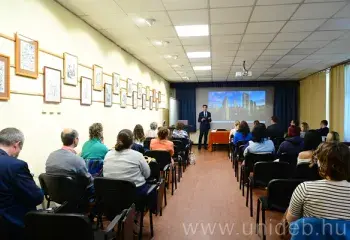
This year, the University of Debrecen hosted the annual meeting of specialists in Dutch studies from Hungary. The conference, which was held on Friday, October 2, at the headquarters of the Debrecen Academic Committee, focused primarily on the teaching of the Dutch language in secondary and higher education.
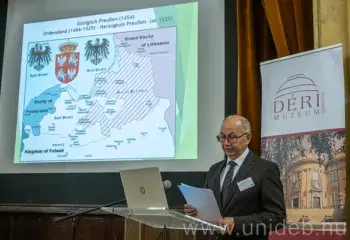
An international conference of historians titled “Towns in Transition in a Changing World — Central European Towns in the Early Modern Period” was held on September 17–18 by the Institute of History at the Faculty of Humanities (BTK) and the Déri Museum. At the academic conference—which drew participants from six countries—Professor Roman Czaja, an honorary doctorate recipient of the university, as well as several other faculty members from the University of Debrecen, delivered presentations.
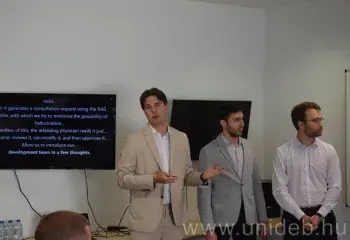
Innovative and multidisciplinary applications of artificial intelligence took center stage at the DEIK.AI Challenge 2026 student competition, organized by the Faculty of Informatics at the University of Debrecen with support from the Innovation Ecosystem Center. The finals of the first stage of this multi-stage competition—the AI Idea Competition—were held at the Faculty of Informatics.
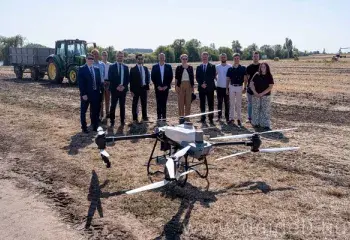
Caroline Savage, Chargé d’Affaires ad interim at the U.S. Embassy in Budapest, and Gellért Gólya, agricultural attaché, learned about precision agriculture, water management, and international research collaborations during their visit to the Látókép Crop Production Experimental Station of the University of Debrecen. The American delegation was welcomed by Rector Zoltán Bács and Endre Harsányi, Vice Rector for Strategic Development.
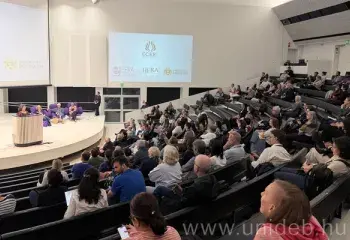
European Conference on Educational Research (ECER), which was hosted this year in Tampere, Finland, has officially ended. This latest event drew 3,619 participants from as many as 82 different countries, including 51 from Hungary. During the course of the closing ceremony, it was announced that the University of Debrecen would act as the host for the next professional gathering in August 2027.
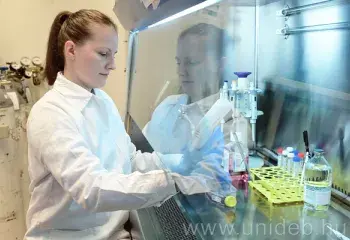
A bile acid naturally present in the body (ursodeoxycholic acid) may contribute to the growth, spread, and metastasis of ovarian tumors, according to a study by researchers at the University of Debrecen. This finding is significant because previous studies on this substance had only demonstrated anticancer effects. The research highlights that substances produced by gut bacteria can affect different types of tumors in varying ways. The researchers have received the Publication Award from the University of Debrecen and the Count István Tisza Foundation for the University of Debrecen for their paper presenting these findings.
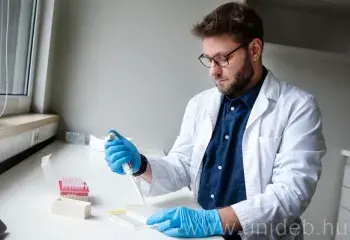
A form of vitamin D significantly reduced a dangerous inflammatory reaction associated with leukemia in laboratory studies, according to research by scientists at the University of Debrecen. This finding could lead to the development of new adjunctive treatments in the long term, but for now, vitamin D is not a substitute for life-saving steroid therapy. The researchers reported their findings in a prestigious international medical-biological journal, and their article has now been recognized with the Publication Award from the University of Debrecen and the Count István Tisza Foundation for the University of Debrecen.
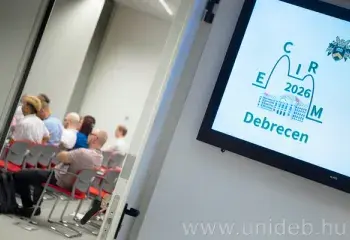
It is once again the University of Debrecen that hosted an international conference between September 6 and 9, dedicated to the precise understanding of inorganic chemical processes that are crucial to modern drug development, industrial catalysis and environmental protection technologies. At the most prestigious European forum for the study of inorganic reaction kinetics and mechanisms, the 7th ECIRM international conference, there were more than 60 researchers presenting their latest findings.
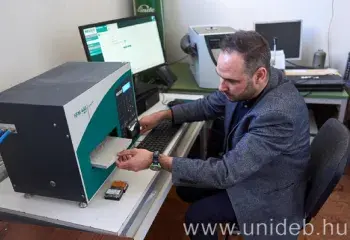
The general properties and the resistance of so-called aerogel materials, which are increasingly used in the construction, automotive, aerospace and oil industries, have been tested at the Faculty of Engineering of the University of Debrecen. The consequent findings of our researchers may contribute to further growth in the application of aerogels.