
Selenium Biofortification – Tiny Element, Big Impact
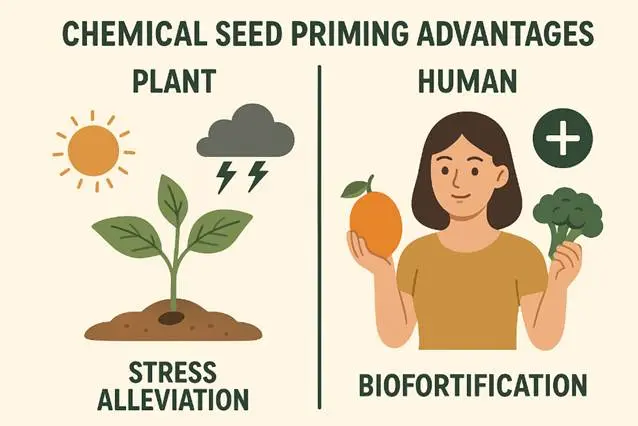
Selenium might be needed only in trace amounts, yet it plays a crucial role in both plant development and human health. In plant science, selenium biofortification refers to enriching crops with selenium during cultivation, improving not only their nutritional value but also their resilience to environmental stress. Research has shown that selenium-treated plants can exhibit enhanced antioxidant activity, better stress tolerance, and improved growth under challenging conditions.
From a human nutrition perspective, selenium is an essential micronutrient involved in immune function, thyroid hormone metabolism, and antioxidant defense systems. However, selenium deficiency remains a global issue in many regions due to low natural selenium content in soils. Biofortification through plant cultivation offers a sustainable way to address this problem by delivering selenium directly through commonly consumed foods.
At the University of Debrecen, selenium biofortification has been an active research area for years, with several studies exploring its effects on plant physiology and nutritional quality (e.g. Domokos-Szabolcsy et al.). These works highlight how controlled selenium supplementation can enhance both yield quality and functional food value.
In the Vitapric experiment, selenium biofortification takes on a new dimension. A portion of the plant samples was treated with selenium-enriched seeds, making this—according to current knowledge—the first microgreen experiment in space to investigate selenium-enriched plant growth. By studying how selenium-treated plants behave in microgravity, researchers aim to better understand how to produce nutrient-rich food in future space missions, while also advancing agricultural practices on Earth.
Start to explore the science behind it!
Selenium and Nano-Selenium Biofortification for Human Health: Opportunities and Challenges - https://www.mdpi.com/2571-8789/4/3/57
Selenium and nano-selenium in plant nutrition - https://link.springer.com/article/10.1007/s10311-015-0535-1
Selenium and its Role in Higher Plants - https://link.springer.com/chapter/10.1007/978-3-319-19276-5_6
Selenium enriched vegetables as biofortification alternative for alleviating micronutrient malnutrition - https://dea.lib.unideb.hu/server/api/core/bitstreams/dd13c9b8-4d87-4edc-99bc-2874f1edbc6f/content
Selenium and nano-selenium biofortified sprouts using micro-farm systems - https://www.researchgate.net/profile/Hassan-El-Ramady/publication/288955062_Selenium_and_nano-selenium_biofortified_sprouts_using_micro-farm_systems/links/5687929e08aebccc4e1519b3/Selenium-and-nano-selenium-biofortified-sprouts-using-micro-farm-systems.pdf
Effect of Selenium Supplementation on in vitro Radish and Green Pepper Seedlings Germination - https://ojs.lib.unideb.hu/actaagrar/article/view/3304
Radish in Space – A 40-Year Hungarian Scientific Journey
Radish might seem like a simple plant, but in space research, it is anything but ordinary. Its fast growth, compact size, and predictable development make it an ideal model for controlled cultivation experiments — especially in extreme environments like space. This is one of the reasons why radish was selected as a model plant in the Vitapric experiment, where it was studied in the form of microgreens aboard the International Space Station.
What makes this story even more remarkable is that radish research in Hungary dates back to the early 1980s. At that time, pioneering in vitro experiments were carried out to better understand how radish tissues develop under controlled laboratory conditions. These studies focused on the formation of storage organs and the regulation of plant growth — an area that had little to no international precedent at the time.
Early findings were presented in Hungarian scientific forums (Fári, M.G. 1981 and 1982), and later published internationally in International Journal of Horticultural Science (Fári,M.G. & Andrásfalvy, A. 1994). These experiments revealed how plant growth regulators influence radish development: cytokinins such as BA or zeatin promoted hypocotyl swelling, while gibberellic acid (GA₃) stimulated shoot elongation but inhibited both swelling and root formation. These insights were essential for understanding how to control plant structure and development in artificial environments.
Interestingly, some of the experimental approaches used decades ago are now reappearing in modern space research. Today, similar methods are being applied in microgravity, where controlled and contamination-free cultivation systems are essential.
The inclusion of radish in the Vitapric experiment is therefore not just a practical decision, but a continuation of a long scientific journey. It connects early Hungarian plant biotechnology research with cutting-edge space biology, showing how ideas developed more than forty years ago can find new relevance in one of the most advanced research environments — space.
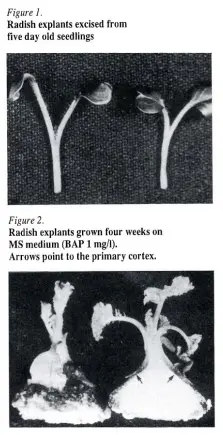
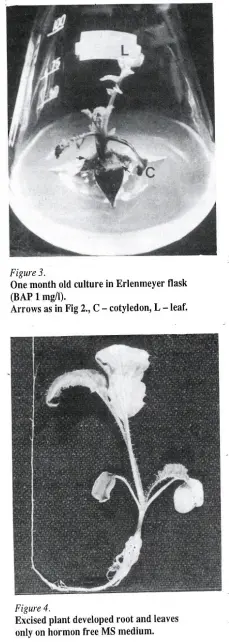
Fári, M.G. & Andrásfalvy. A. (1994) — The role of growth regulators in development and swelling in vitro of radish hypocotyls (IJHS)
Closing the Loop – Plants, Insects and the Future of Space Food Systems
Producing food in space is not just about growing plants — it is about building complete, self-sustaining systems. In long-duration missions, where resupply from Earth is not an option, every resource matters. This is where circular food systems come into play: systems where waste is not discarded, but reused, transformed, and reintegrated into the production cycle.
Plants are at the heart of these systems. In experiments like Vitapric, crops such as pepper, radish, and wheat are grown as microgreens, providing fresh, nutrient-rich food in a short time. However, when plants are cultivated to full maturity — as has already been demonstrated on the International Space Station — they produce not only edible parts, but also a significant amount of biomass in the form of leaves and stems. Instead of being treated as waste, this biomass can become a valuable resource.
This is where insects enter the system. In recent research (Meier et al., 2024), plant-derived materials such as duckweed, alfalfa, and pepper were used as feed supplements for yellow mealworm larvae (Tenebrio molitor). The results showed that these plant-based substrates can significantly enhance the protein content of the larvae, while maintaining high survival rates and efficient feed conversion. In other words, plant biomass can be transformed into high-quality protein through insect production.
This approach opens up a powerful possibility: integrating plant cultivation and insect farming into a single circular system. In such a system, the inedible parts of plants can be recycled as feed for insects, which in turn provide an additional source of protein for human consumption. This reduces waste, increases efficiency, and brings us closer to closed-loop life support systems.
The idea is simple, yet transformative: nothing is wasted. Every leaf, every stem, every gram of biomass becomes part of a continuous cycle. What begins as a plant can return as food — through a different pathway. This is not just a concept for space exploration, but a model that could reshape sustainable food production here on Earth.
Meier O., Fehér M., Domokos-Szabolcsy É. (2024) — Circular food production in space environment – Insect protein production by supplementing green biomass in feed
Download here: Proceedings – Selected papers of H-SPACE 2024 https://space.bme.hu/previous-events/