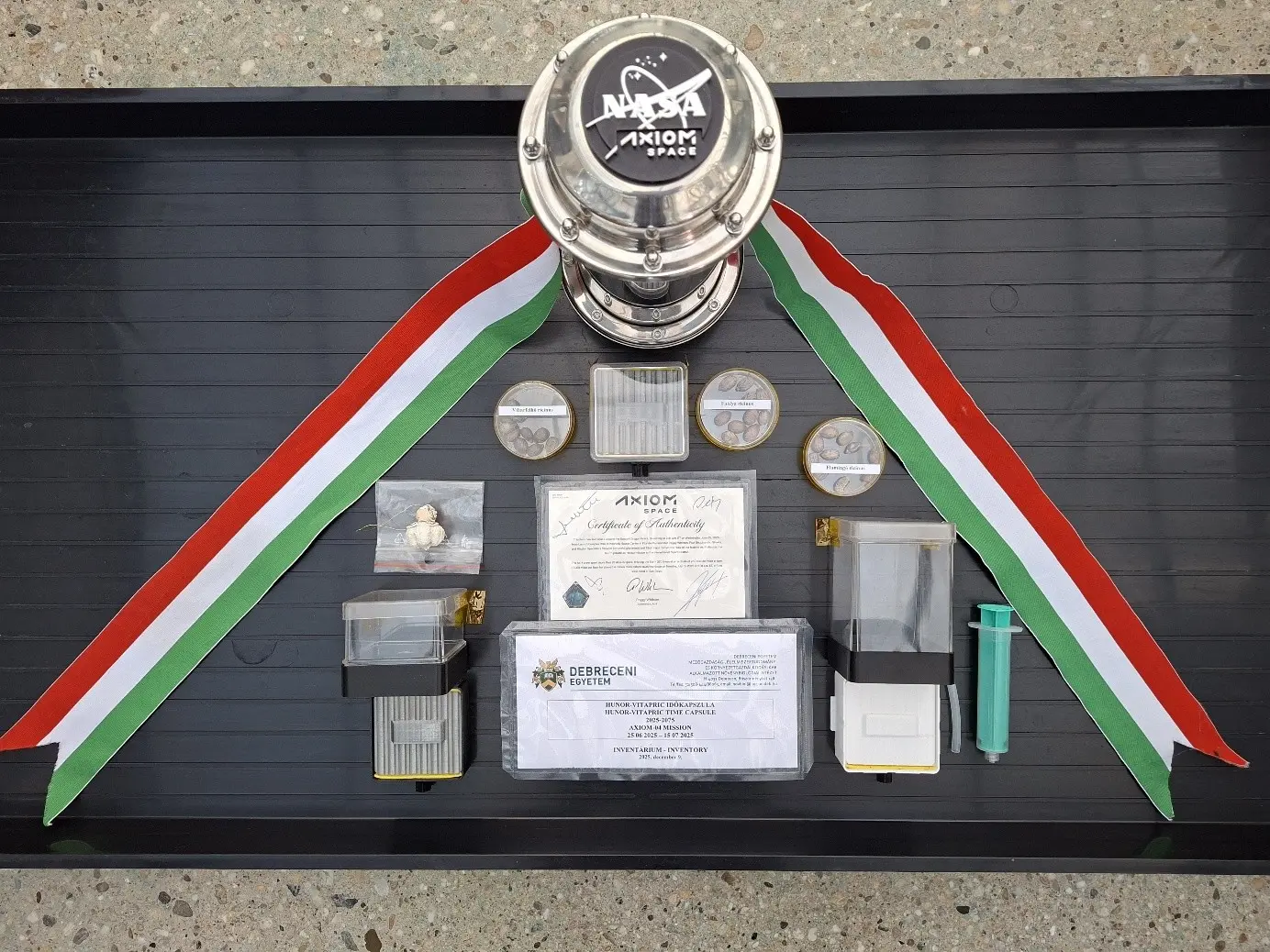
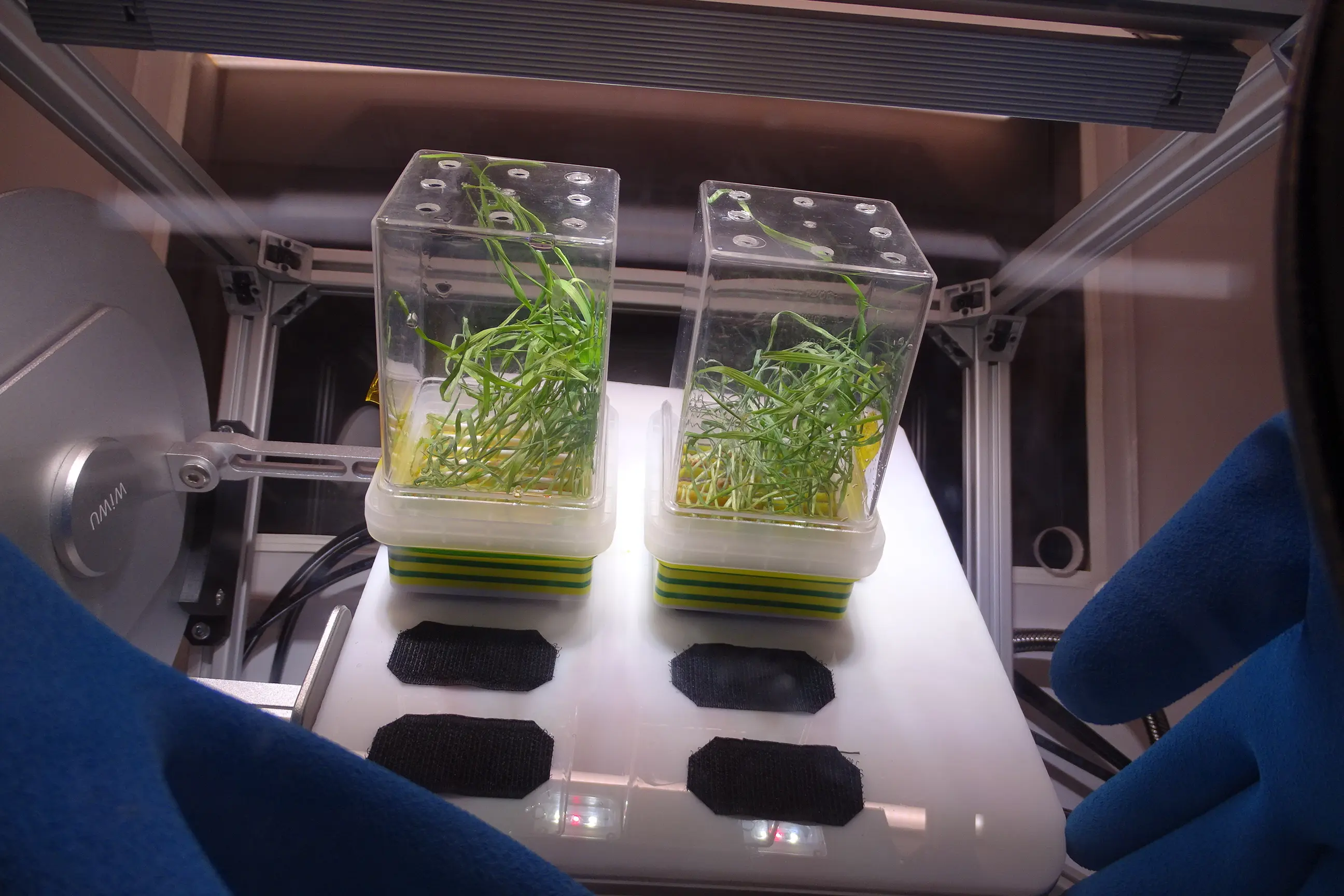
In the 14-day experiment launched in June 2025 by Tibor Kapu (research astronaut), a “miniaturized space garden” composed of the devices presented here was approved for transport to the ISS, which looked as shown in the figure below:
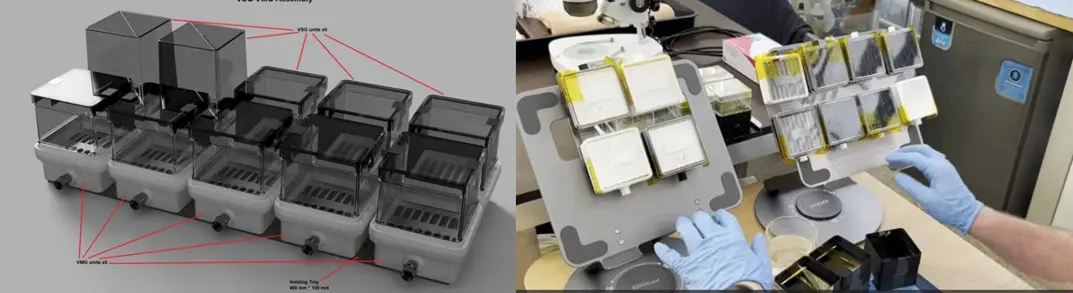
The devices were made up of a total of 130 components. In compliance with transportation constraints, the devices were partially assembled at the Biodrome in Debrecen and then sterile-packed, with a total mass of 1750 g and a volume of 4.7 liters. The assembly of the Hungarian mini space garden, consisting of 12 Vitapric boxes, was carried out by Tibor Kapu.
Following pre-trained procedures, Tibor assembled the plant cultivation units on site in a time-controlled manner, taking into account the germination characteristics of the different plant species. Interestingly, this novel space research device was developed in three variants, each adapted to the germination requirements of three different plant species, while also allowing for the possibility of further plant development stages.
The non-transparent components of the devices were manufactured from polycarbonate using 3D printing technology by the 3D Center of University of Pécs, based on a patent application submitted by the University of Debrecen.
Both the individual elements of the Vitapric mini space garden and the biological samples—whether separately or in assembled form—complied with the extremely strict three-stage safety inspections, examinations, and additional safety tests defined by Axiom Space and required by NASA.
The selection of the three plant species included in the space plant experiment was preceded by years of complex scientific research covering biotechnology, plant physiology, and engineering fields. Considering the historical background of the program, pepper was the primary candidate.
In the Vitapric space pepper experiment, consisting of eight devices, we included the American NuMex Española Improved (NEI) variety and the Hungarian Enigma Hot (HEH) determinate cluster-type Hungarian pepper, which was selected under LED lighting by the University of Debrecen. An interesting novelty is that half of the seeds were treated with a specially formulated selenium-enriched substance in order to promote faster and more uniform germination compared to conventional conditions. Through this fortification approach, we aimed to enhance the biological value of the treated pepper plants, primarily by stimulating biologically active compounds that may have beneficial effects on astronauts’ health. This represents a novel aspect of our experiments, as (to our knowledge) such seed treatment studies have not previously been conducted under space conditions.
During our Vitapric radish microgreen experiment, consisting of two devices, we investigated the accelerated germination potential of an old Hungarian monthly radish variety, Korai Piros. Radish was selected for the Vitapric space experiment because it represents the first study to produce microgreens suitable for human consumption on the ISS. Similarly to peppers, a portion of the radish seeds also received selenium pre-treatment.
As the third plant species, wheat was selected from among cereals. In our Vitapric wheatgrass production experiment, also consisting of two devices, we investigated the accelerated germination of the Pilis winter wheat variety, bred by the Cereal Research Non-Profit Ltd. (GKI), Szeged, while testing a specially developed innovative space growth medium. As with peppers and radishes, part of the wheat seeds also received selenium pre-treatment for comparative analysis.
All devices, as well as the pepper, radish, and wheat seeds they contained, were sterilized using a strict surface disinfection protocol. Following appropriate sterile packaging procedures, they were delivered to the Houston headquarters of Axiom Space, and subsequently transported to the ISS with the help of the Grace spacecraft.
In addition to the constraints of device size, a key consideration was minimizing the amount of water required to initiate germination and support early seedling development. To address this challenge, according to the design, 500 ml of drinking water was used to enable the germination and 7–14 day growth of nearly 1,000 seeds in the Hungarian mini space garden. This corresponded to less than 0.5 ml of water per seed under microgravity conditions.
The plants that germinated aboard the space station were harvested by Tibor Kapu at the appropriate times, following pre-trained procedures, and were then carefully packaged and labeled. Subsequently, the plant samples were placed in a −80 °C freezer unit called MELFI, from where they were eventually returned to us at the Space Plant Research Laboratory of the University of Debrecen.
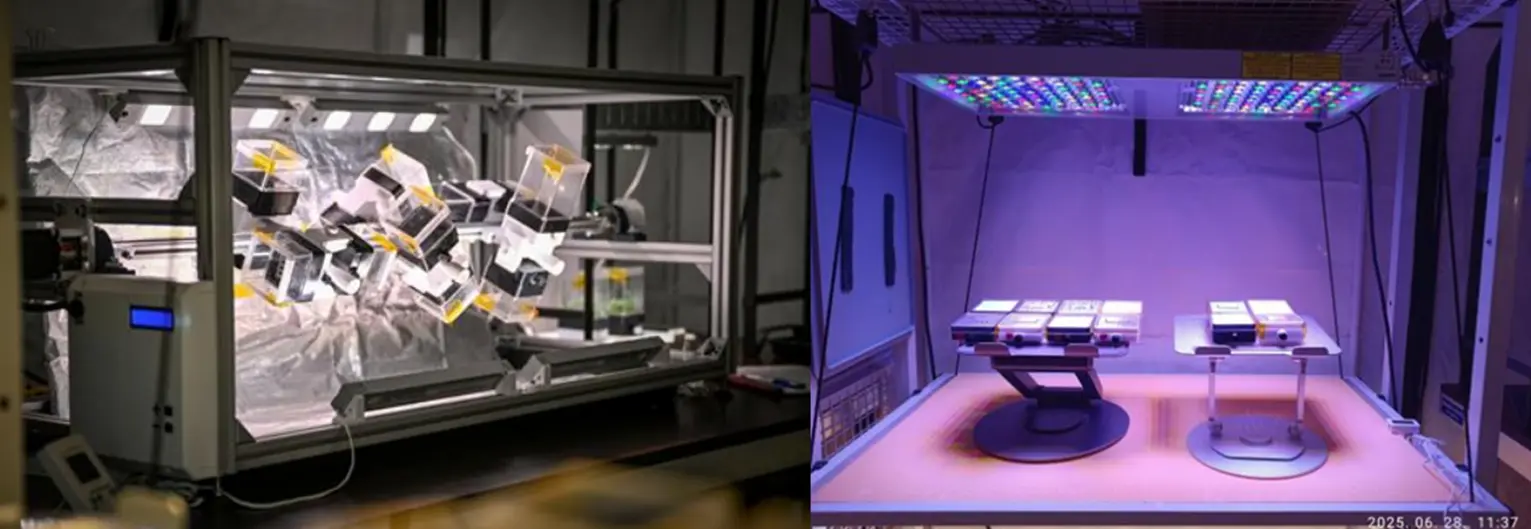
Parallel to the Axiom-4 mission space mission, ground-based control Vitapric experiments were also conducted in the BIODROME research greenhouse of the University of Debrecen. For this purpose, a Vitapric Ground Simulation Space Chamber was established, equipped, among other tools, with a multifunctional clinostat (with 12–20 workstations) capable of partially simulating microgravity conditions, shown in the figure below:
On March 16, 2026, plant samples that had previously been exposed to the conditions aboard the International Space Station were officially received at the University of Debrecen during a press event. This milestone represents a significant step forward for both Hungarian and international research in space agriculture, as the returned samples offer a unique opportunity to better understand plant adaptation under extreme environmental conditions.
The samples are currently undergoing comprehensive analytical, biochemical, and molecular biological investigations. The primary focus of these analyses is to evaluate the behavior of selenium-treated (seed-primed) seeds under different gravitational conditions. The studies compare the effects of microgravity, reduced gravity, and Earth’s gravity, providing insights into how selenium treatment influences plant development and stress responses. In addition, special attention is given to identifying which biochemical pathways are activated or suppressed in response to these unique environmental stress factors in the selected plant species.
These investigations build upon the achievements of the HUNOR–VITAPRIC program, which has introduced several innovations to the fields of space agriculture and space plant biology. One of its key outcomes is the development of three novel, multifunctional plant cultivation device families—VSG, VMG, and VPG—designed for passive water and nutrient supply. These systems are suitable for both terrestrial and space applications, and, together with the associated microgravity cultivation technology, have achieved the highest level of space industry qualification (TRL-9).
Notably, the plant biology experiments were conducted not in a specialized plant growth chamber, but within the spacecraft cabin under non-optimized environmental conditions. The “Mini Space Garden” concept successfully demonstrated that plant growth and maintenance are feasible even under such constraints.
Another major breakthrough of the program is the first successful seed priming experiment carried out under microgravity conditions using three different plant species. Furthermore, researchers produced, for the first time, fortified space-grown microgreens suitable for potential human consumption from Hungarian-bred radish and pepper seeds, as well as fortified space-grown wheatgrass.
In addition, a pioneering phytotechnological experiment tested a lightweight growth medium containing recycled glass foam spheres. This innovative approach not only enhances the efficiency of plant cultivation in space but also contributes to sustainability considerations.
The results of the HUNOR–VITAPRIC program clearly demonstrate that advances at the intersection of space research and plant science are bringing the concept of sustainable food production in space closer to reality, while also offering valuable applications for improving agricultural systems on Earth.
One of the most compelling scientific questions addressed within the HUNOR–Vitapric research program was how plants respond to extremely limited environmental conditions. During the experiments, plants were produced under minimized volume and restricted water supply, and subsequent sample processing focused on understanding how these unique stress factors influence biological systems at the molecular level. Particular attention was given to identifying which biochemical pathways are activated or suppressed in the selected three plant species under such extreme conditions.
The newly obtained insights into gene regulation have significance far beyond space research. In the future, they may play a key role in precision plant breeding, especially in optimizing field crop production under increasing climate stress. In addition, these findings may contribute to the development of innovative indoor cultivation technologies, enabling more efficient resource use and more stable food production systems.
The results of the HUNOR–Vitapric program clearly demonstrate its strong international relevance and integration. The research supports the continued advancement of Hungarian space plant biology and highlights realistic opportunities for participation in future space missions and broader scientific collaborations.
This scientific vision is closely linked to a symbolic connection between past and future. In 1985, David Attenborough placed a time capsule in the foundations of the Princess of Wales Conservatory at Kew Gardens. The capsule contains seeds of essential food crops and endangered plant species, and it is scheduled to be opened in 2085—at a time when many of these species may have become rare or even extinct.
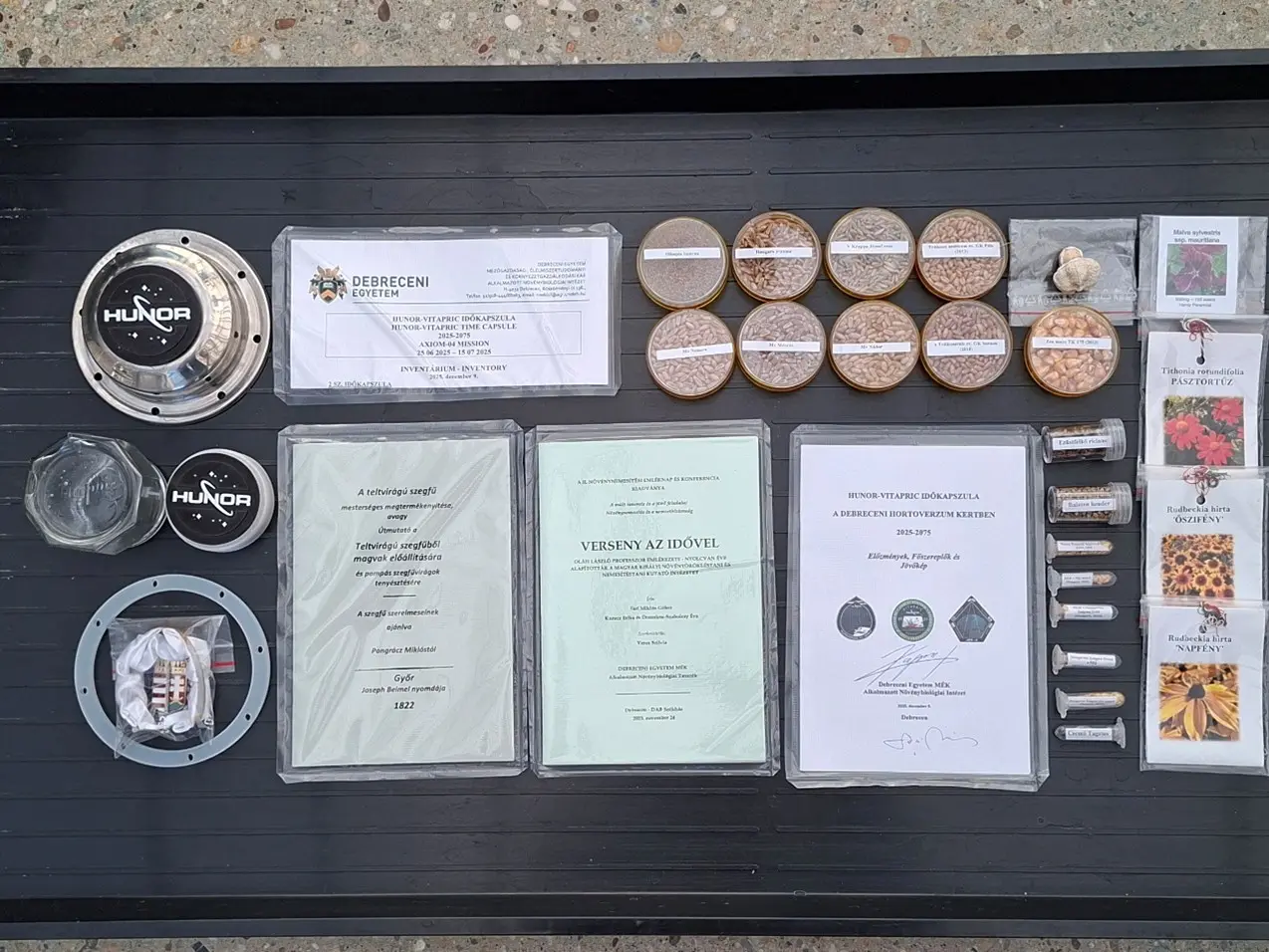
Inspired by this idea, the concept of the Vitapric Time Capsule was established. As part of the IVth Plant Breeding Memorial Day and Conference (NEK’ 2025), on December 9, 2025, a time capsule planned for 50 years was placed in the developing Hortoverzum Garden in Debrecen, which will also host the Biodrome. This event represents not only a scientific milestone but also a symbolic gesture, creating a bridge between present-day research and future generations.
The time capsule includes thoughts and proposals contributed by the organizing institutions and professional communities of the conference, focusing on the future of Hungarian food production. Special emphasis is placed on addressing the risks of climate change through advancements in biotechnology, plant breeding, water management, circular economy practices, and sustainability. The ceremonial placement of the capsule was honored by the presence of Farkas Bertalan, brigadier general and research astronaut.
The spirit of the Vitapric program is well captured by a thought frequently quoted by Szent-Györgyi Albert from the work of Arthur Schopenhauer: “Discovery means seeing what everybody has seen and thinking what nobody has thought.”
This perspective defines the Vitapric research approach: seeking new answers to familiar questions and developing solutions that may shape the future of food production—not only on Earth, but beyond it as well.
The figures show the “space capsules” commemorating the first Hungarian space plant experiment, along with their contents.